Five Flavour Pairings That Always Work (and Why)
Pairing is not magic. Most combinations that feel instinctively right work because of one of three principles: they share a flavour compound, they contrast usefully, or they balance each other’s weaknesses. If you understand which principle is at work, you can invent your own.
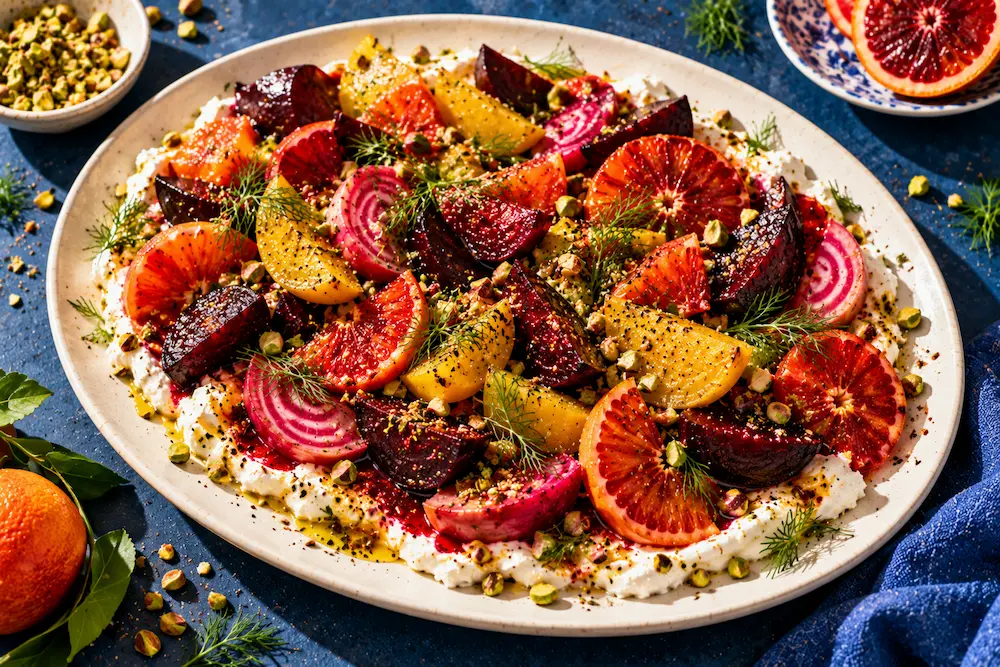
1. Beetroot and orange
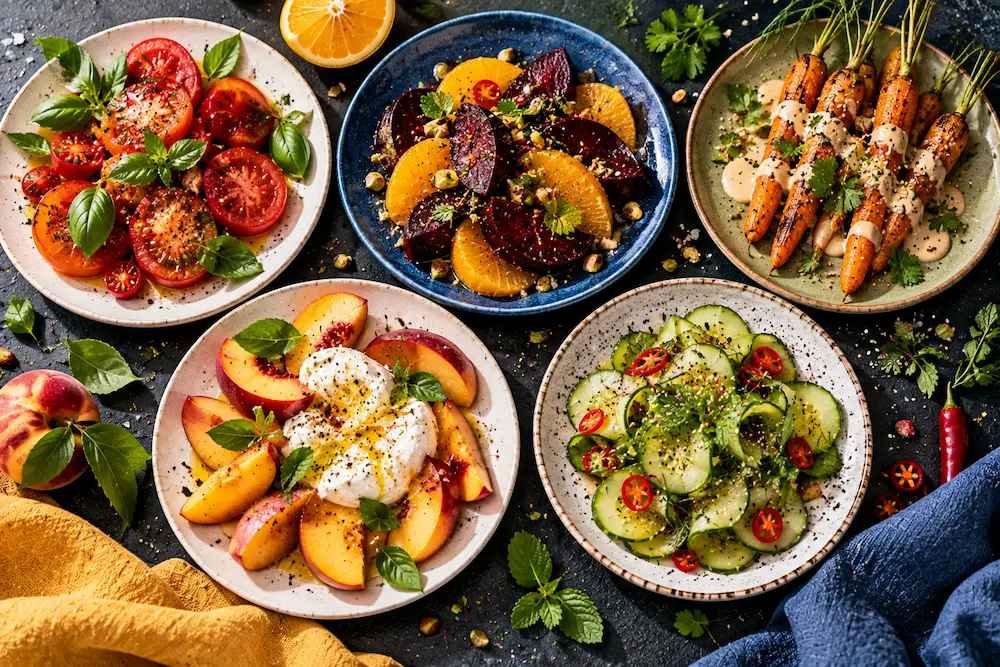
Beetroot carries an earthy, mineral flavour that can verge on muddy. Orange is bright, sweet and sharp. The acid lifts the earth and the sweetness meets beetroot’s own. Add something creamy such as goat’s cheese and a little fresh dill, and the whole thing snaps into focus.
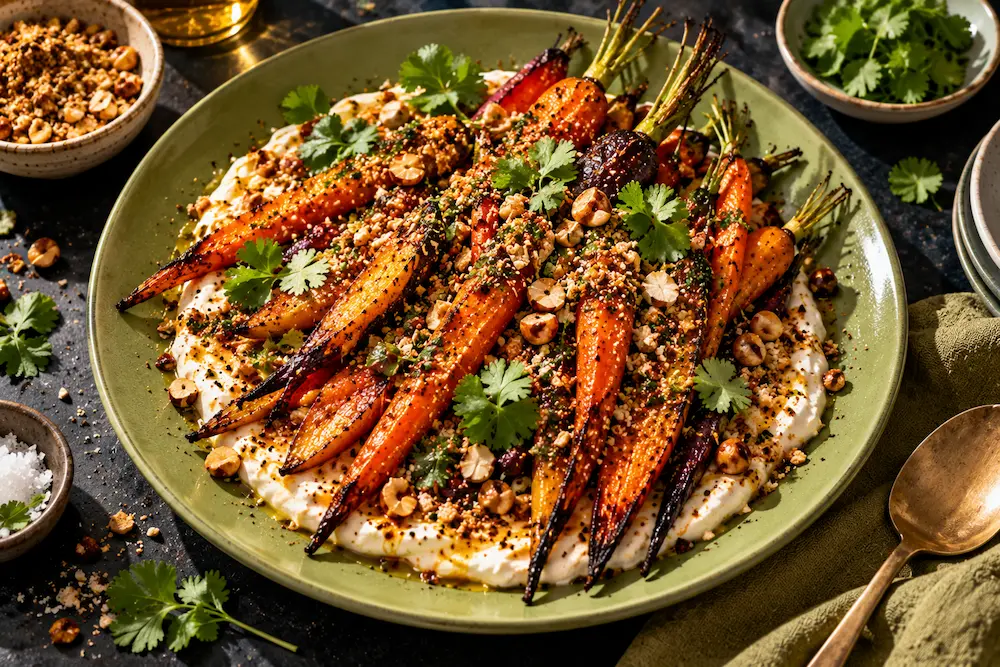
2. Carrot and tahini
Roasted carrots develop deep caramelised sweetness. Tahini brings nutty, slightly bitter savouriness, and lemon wakes it up. This is a classic example of balancing: sweet against bitter, soft against rich. A little cumin or coriander seed ties it together because it shares an earthy note with carrot.
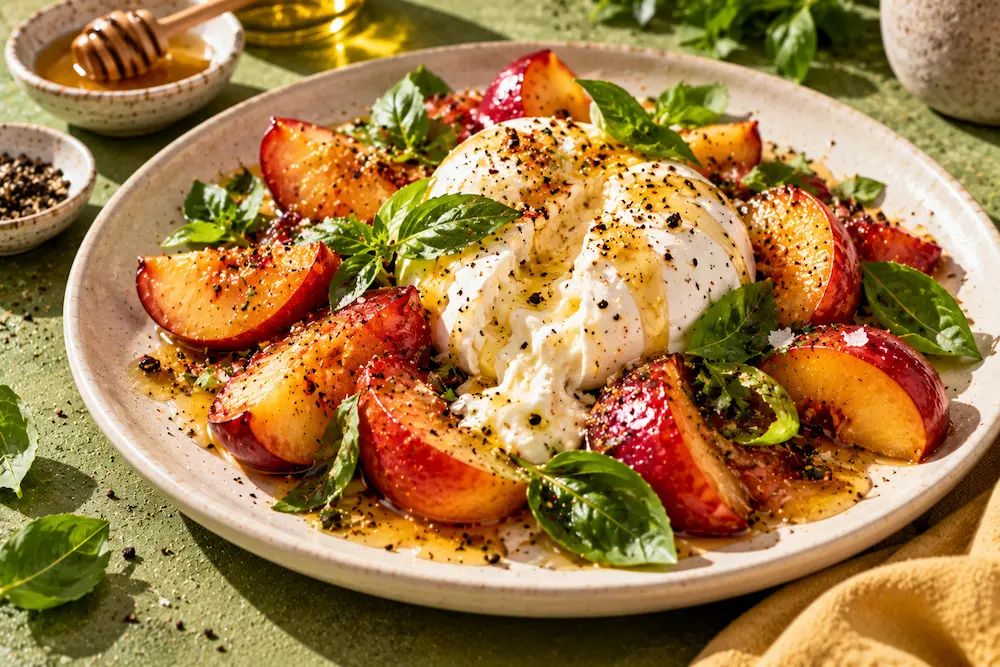
3. Stone fruit and soft cheese
Peaches and nectarines are fragrant, juicy and sweet. Burrata, ricotta and fresh goat’s cheese are creamy, mild and milky. Together they offer sweet and salty, cold and soft. Black pepper and a little herb add the grown-up edge. Swap in figs, plums or grapes depending on the season.
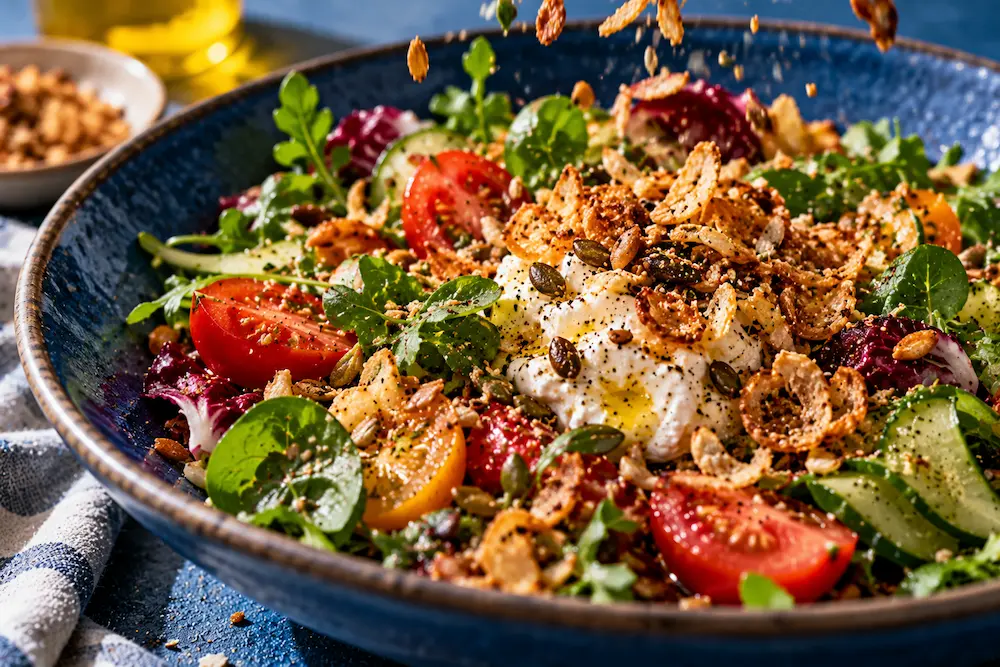
4. Cucumber and chilli
Cool, watery cucumber is perfect for taking heat. A chilli-spiked dressing finds balance with the cucumber’s coolness, and the contrast makes both feel more alive. Add a hit of sesame, rice vinegar or lime and you have the logic behind countless refreshing salads around the world.
5. Broccoli and anchovy (or miso)
Charred brassicas have a slightly bitter, sulphurous savouriness. Anchovy, miso and aged cheese bring umami, and umami loves bitterness. A squeeze of lemon and a toasty crunch such as breadcrumbs gives the whole thing structure.
Why these work
- Sweet meets earthy or bitter: beetroot and orange, carrot and tahini.
- Rich meets sharp: cheese with fruit, tahini with lemon.
- Cool meets hot: cucumber with chilli.
- Umami meets bitter: broccoli with anchovy or miso.
Build your own
Pick a base ingredient and ask three questions: what is its dominant flavour? What opposes that flavour? What would soften or round it? Once you have those, add a texture. A bitter leaf wants sweetness and fat. A sweet vegetable wants acid and salt. A rich cheese wants fruit or pickle.
Pairings in practice
Take a tin of butter beans, usually a rather beige affair. Warm them in olive oil with a little smoked paprika and garlic, add a splash of sherry vinegar, and you have sweet, smoky and sharp in one pan. Finish with parsley and a few torn croutons, and the humble bean becomes a dish with edges.
Or take cucumber. On its own it is mostly water. Smash it, salt it, and dress it with sesame, soy and a spoonful of chilli crisp, and suddenly it has heat, salt, nuttiness and crunch. Nothing exotic has been added; each element simply answers a question the cucumber was asking.
The point is to stop thinking in recipes and start thinking in conversations. Every ingredient says something, and a good pairing is the reply.
You can explore this in our online Flavour Lab, which uses a curated set of compatible pairings to build you a combination to cook from. It is not an algorithm pretending to be a chef, just a pocket guide to what tends to work.