Texture Is the Fourth Flavour
Ask someone what makes a dish good and they will talk about flavour. Ask them why they could not stop eating it and they will often describe a texture: the crunch of the topping, the silkiness of the sauce, the pop of a seed. Texture is the quiet engine of appetite, and almost every great salad is built on contrast.
The texture palette
Think in families. A balanced plate usually draws from at least three of them.
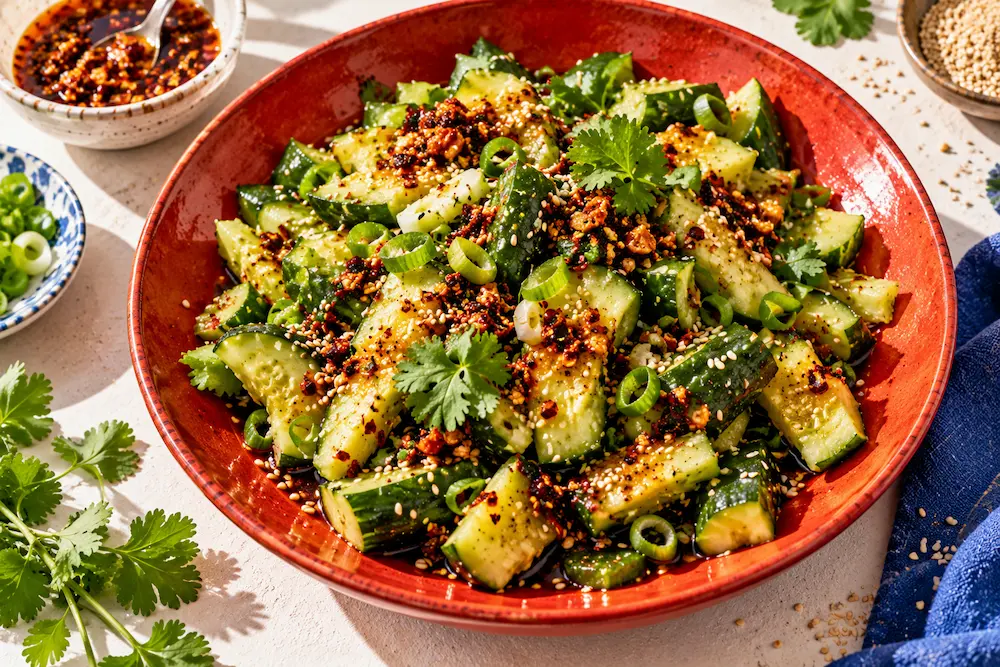
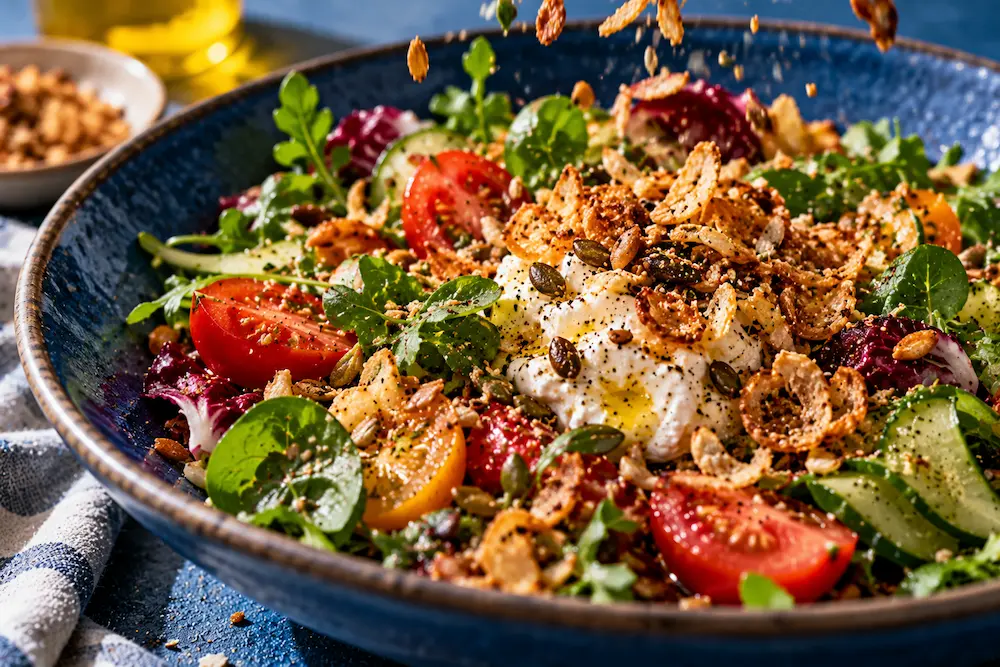
- Crisp and crunchy: toasted nuts and seeds, crispy shallots, pangrattato, fried capers, raw radish, cucumber.
- Creamy and silky: whipped feta, burrata, labneh, hummus, avocado, a soft-boiled egg.
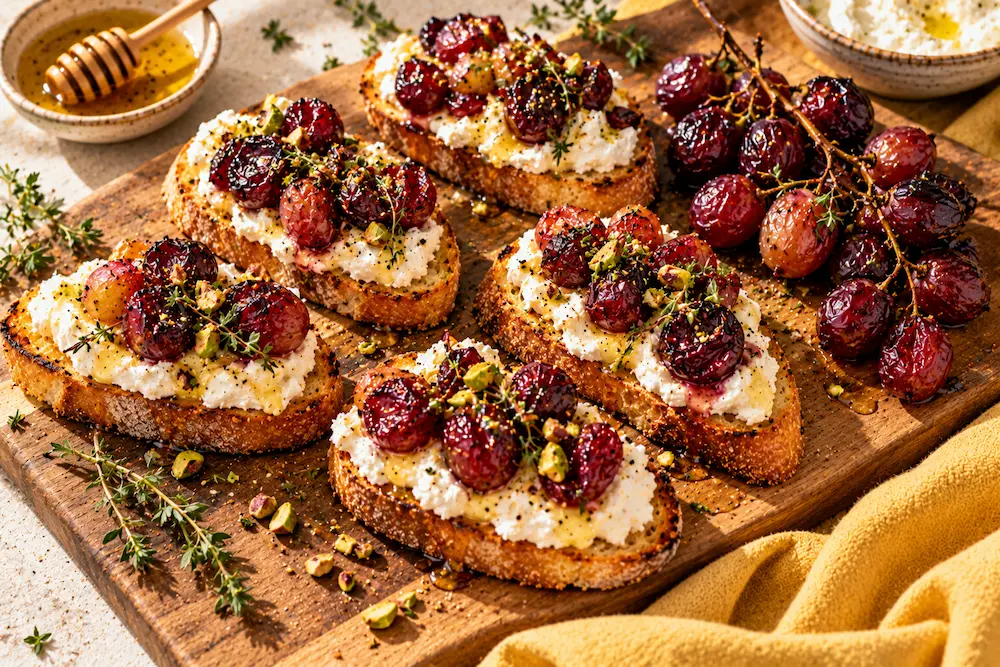
- Juicy and yielding: ripe tomatoes, stone fruit, orange segments, roasted grapes.
- Chewy and tender: grains, torn bread, roasted vegetables, pulses.
- Fresh and snappy: crisp leaves, shaved fennel, apple, herbs.
The rule of three
When a salad feels dull or one-note, check the texture count. Most disappointing salads have only one or two textures, usually soft leaves and soft cheese. Add a third, and make it opposite to the dominant one. A creamy dish asks for something crunchy. A crunchy dish asks for something cooling and soft.
Keep crunch crunchy
The common failure is adding crunch too early. A crispy topping loses its snap within minutes of meeting moisture. A few habits help.
- Add crunchy toppings at the last second, at the table if you can.
- Season them separately so you do not need to toss them through the dressing.
- Toast nuts and seeds until they are properly golden, then cool them completely before storing, since warm nuts steam in a jar.
- Store dry toppings in airtight jars; they will keep for a week or two.
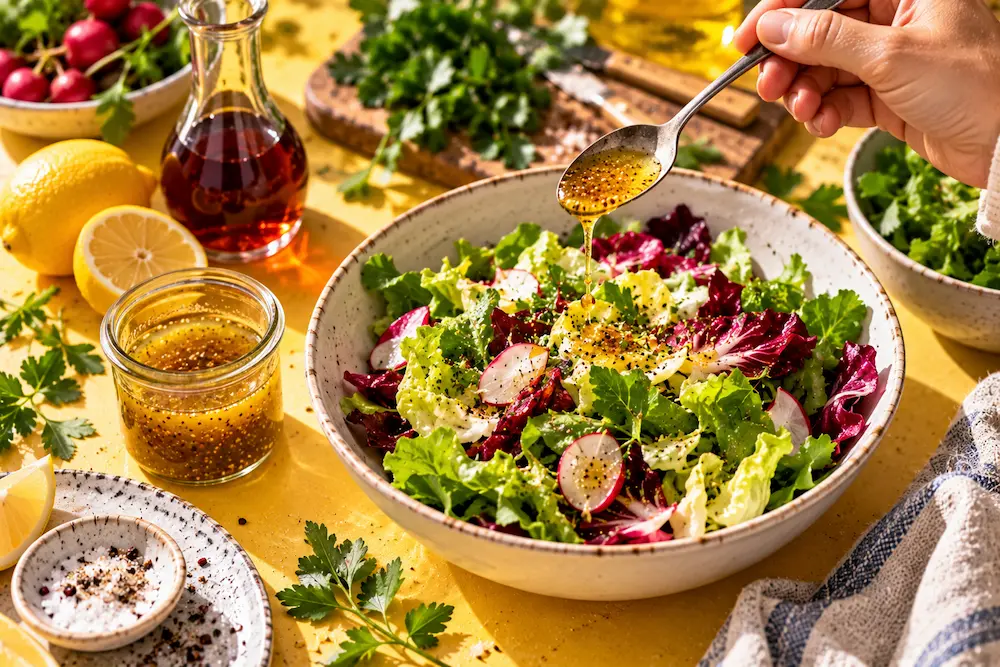
- Dress the leaves first and sit the crunch on top, rather than mixing it in.
Make the soft things interesting
Smooth textures benefit from a little variation too. Whip feta with yoghurt until airy and leave some pieces rough. Leave chickpeas whole in the middle of a hummus. Fold a few torn herbs into a soft cheese. Tiny irregularities make a creamy element feel hand-made rather than industrial.
Temperature is a texture
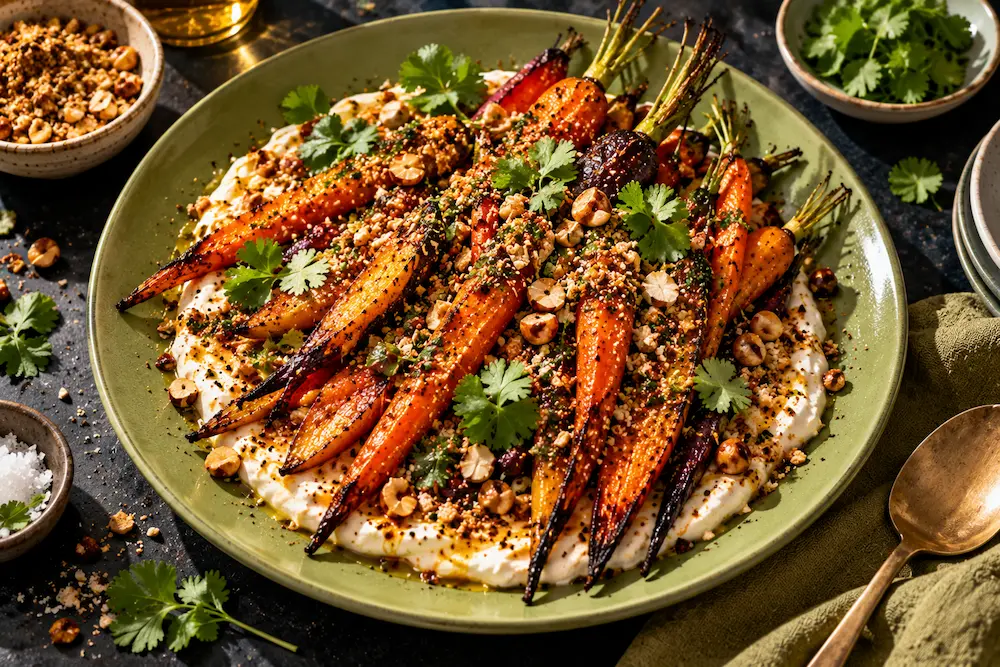
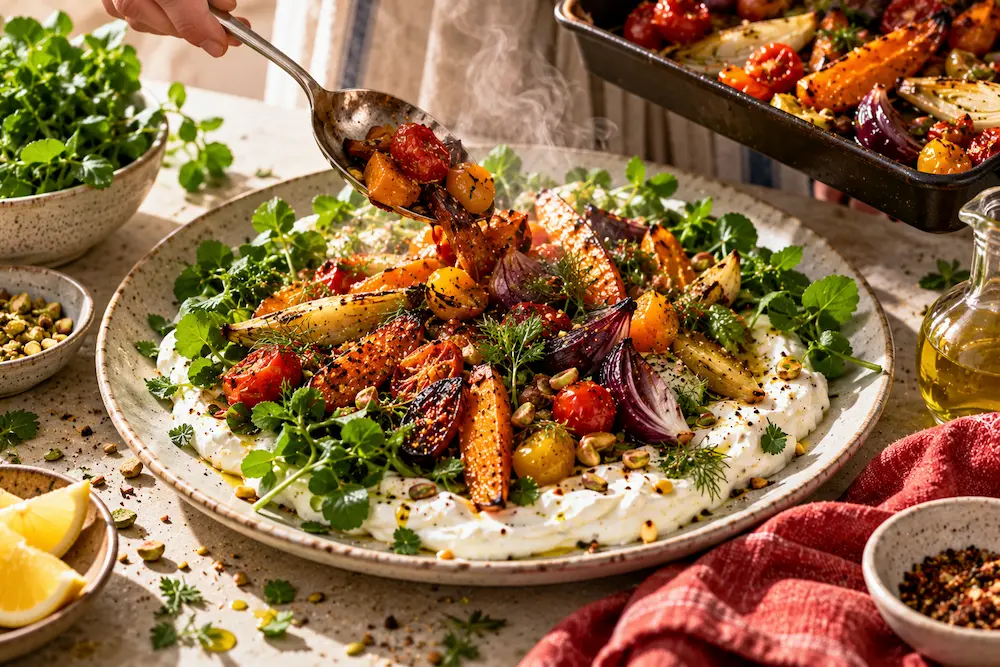
A warm roasted carrot on a cold yoghurt is a texture experience as well as a flavour experience. So is a cool cucumber against a hot chilli oil. Do not underestimate the effect of contrast in temperature; we explore this more in our piece on warm-meets-cold salads.
If every bite is the same, you stop tasting. Contrast keeps your attention on the plate.
A quick audit
Next time you plate a salad, run through this: is there something crunchy? Something creamy? Something juicy? Something fresh and herbaceous? If you can say yes to three of those four, you are probably on to something. If not, a sprinkle of toasted seeds or a spoonful of yoghurt will often do the trick.
Three quick texture upgrades
You do not need new recipes to put this into practice. Try one of these on a dish you already make.
- A flat pasta salad or grain dish: finish with breadcrumbs fried in olive oil with garlic and lemon zest. It adds crunch and savouriness in five minutes.
- A smooth soup or purée: top with something crisp, such as fried sage, crushed seeds or torn croutons, and something fresh, such as herbs or shaved raw vegetable.
- A crunchy slaw: add one soft, creamy element, such as avocado, soft cheese or a spoonful of yoghurt, so there is relief between the crunch.
Pay attention next time you eat something you love. Chances are the mouthfeel is doing as much work as the seasoning. Naming textures out loud is one of the quickest ways to become a better cook, because it turns a vague “it needs something” into a specific fix.
In our 90-minute Crunch Club workshop, we prepare five crunchy toppings in small teams using some ingredients prepared in advance. Chickpeas roast while we work on the other toppings, then we taste them with simple salads.