The British Salad Calendar: What to Buy and When
British growing seasons are generous but specific. A tomato in July is a different fruit from a tomato in February. Cooking seasonally is less about rules than about knowing when ingredients are at their peak and building dishes around them. Here is a quick guide by season.
Spring (March to May)
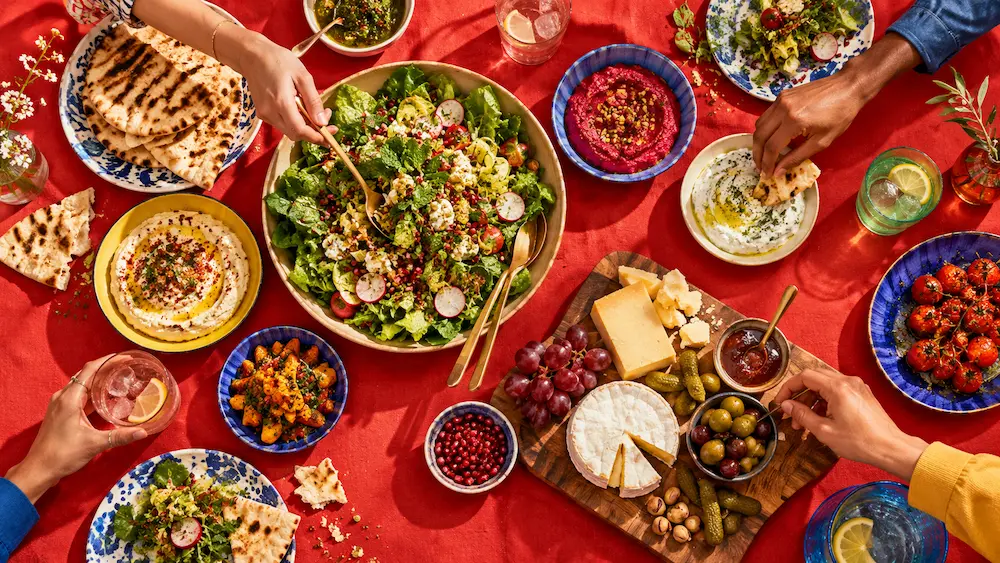
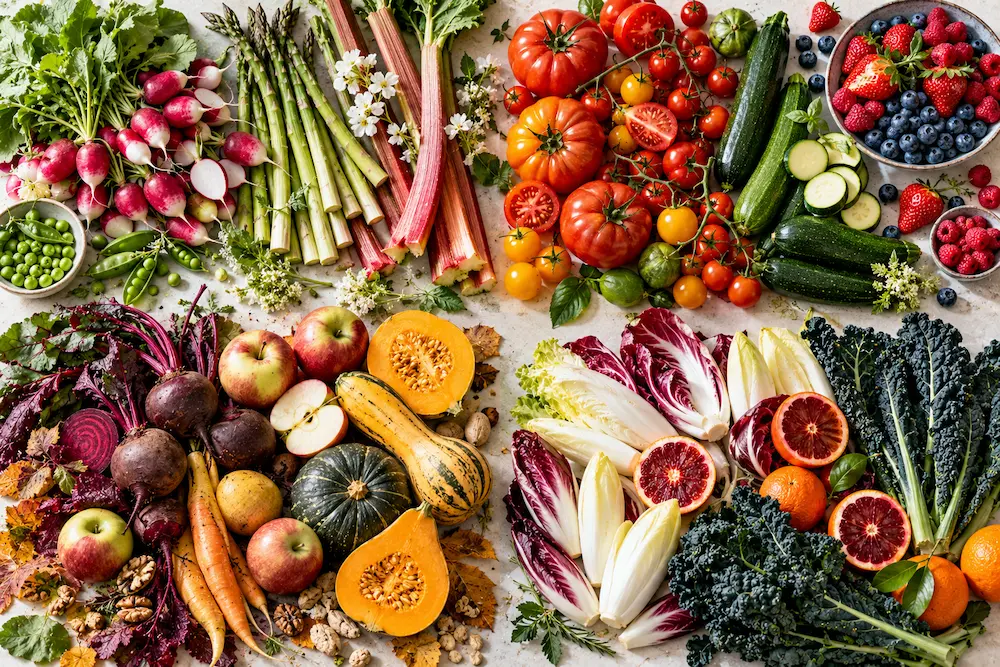
The year begins slowly, then picks up speed. Look for tender leaves, radishes, spring onions, wild garlic, asparagus (from late April), new potatoes, rhubarb and early peas and broad beans. Flavours are fresh, green and slightly bitter. Dress simply with lemon, good oil and herbs. Radishes with cultured butter, shaved asparagus with Parmesan and pea-and-mint dips are perfect.
Summer (June to August)
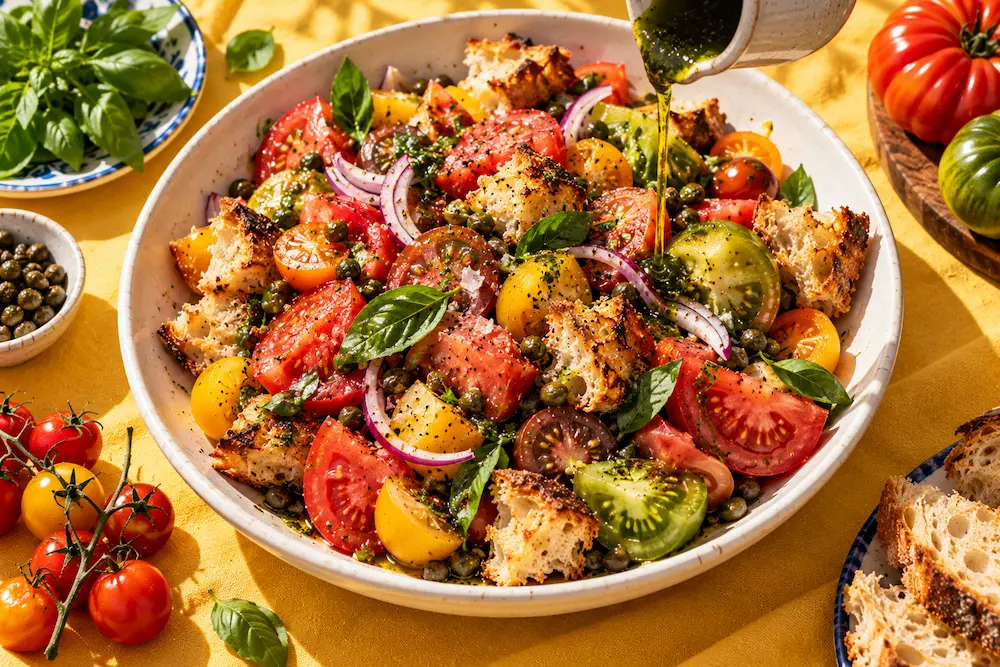
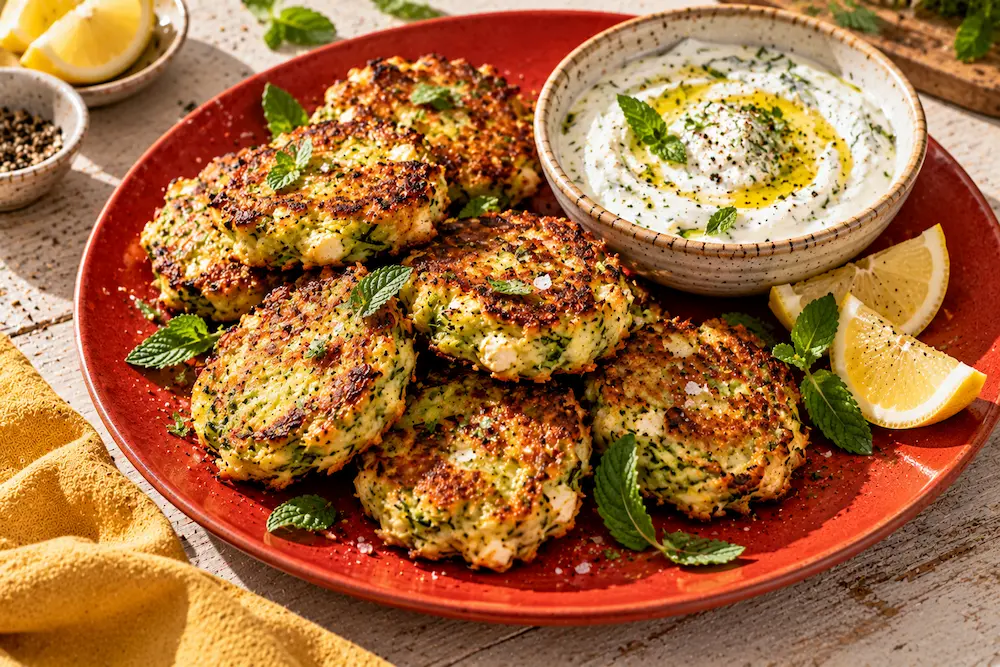
This is the season of abundance. Tomatoes arrive in full colour from July, alongside cucumbers, courgettes, peppers, runner beans, new carrots, soft herbs and an avalanche of berries. Stone fruit, if you can find good British ones, appears towards late summer. The principle is to do very little. Salt a tomato, add basil, serve with bread. Grill courgettes, fry courgette flowers, make fritters.
Autumn (September to November)
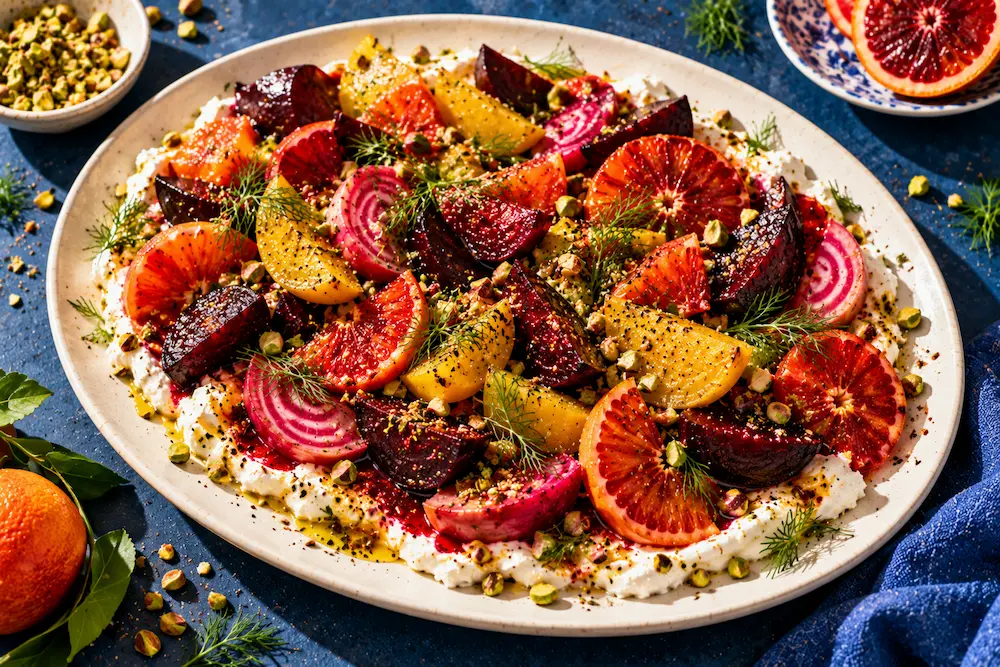
The roots are back. Beetroot, carrots, squash, pumpkin, fennel, celeriac, kale, chard and sprouting varieties arrive alongside apples, pears, plums, quinces and late tomatoes. Hazelnuts and walnuts are harvested. Flavours turn earthy and sweet, and roasting becomes the technique of choice. Pair with tahini, tangy cheese, bitter leaves and orange.
Winter (December to February)
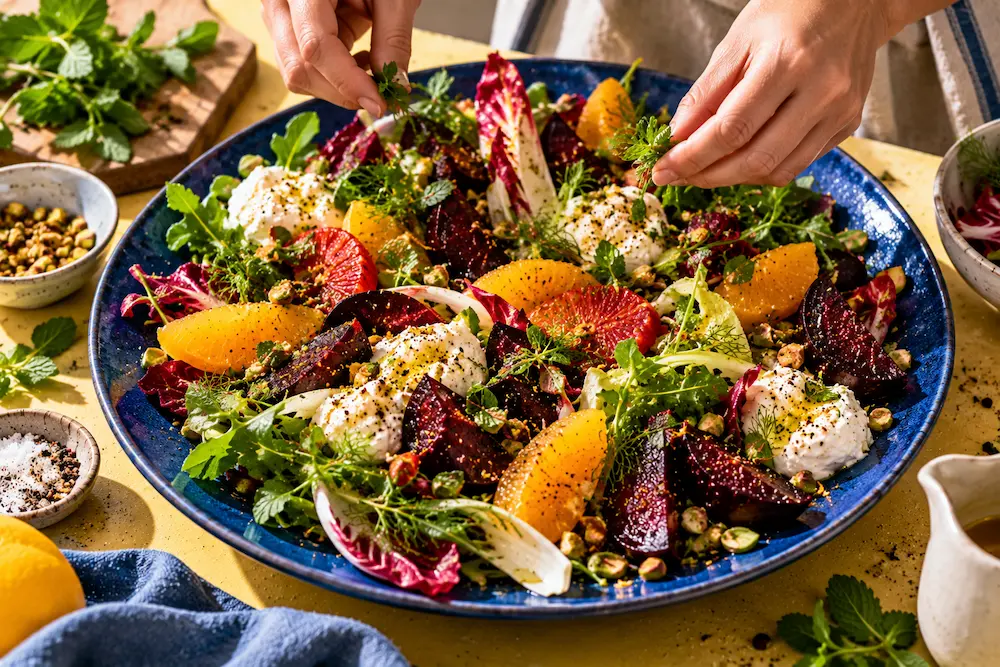
Winter vegetables are underrated. Chicory, radicchio, cavolo nero, Brussels sprouts, leeks, parsnips and cabbage all thrive in the cold, and imported citrus, especially blood oranges, comes into season. This is the time for roasted brassicas, shaved raw cabbage, blood orange salads and bitter leaves with sharp dressings. Warm and cold elements together keep winter salads satisfying.
Pantry heroes all year
- Nuts and seeds, toasted fresh.
- Tinned pulses: chickpeas, butter beans, cannellini.
- Good vinegar: sherry, red wine, cider.
- Preserved lemons, capers, anchovies and olives.
- Tahini, miso and mustard for dressings.
How to shop seasonally
- Shop at markets and greengrocers where seasonal produce is the default.
- Ask your greengrocer what is best this week.
- Buy slightly less than you think you need and use all of it.
- Store tender herbs with stems in water and root vegetables in a cool, dark place.
Seasonal cooking is not about restriction. It is about catching things at their best.
Three dishes that work in any month
If the calendar feels like a lot to remember, start with three reliable formulas and swap the produce as the seasons turn.
- A roasted vegetable plate: any root, squash or brassica, roasted hard, on yoghurt or whipped cheese, with seeds and herbs.
- A raw, sharply dressed salad: shaved fennel, radish, cabbage or cucumber with lemon, oil and salt, and something salty to finish.
- A bean or grain salad: warm pulses with a punchy dressing, plenty of herbs and a crunchy topping.
Each of those is a template, not a recipe. Change what is in the box that week and you will never cook the same thing twice.
Our Seasonal Showstoppers workshop changes through the year so that every session is built around what is genuinely good that month. Ask us about the current menu when you enquire.