Hosting Without the Hovering: A Make-Ahead Mezze Plan
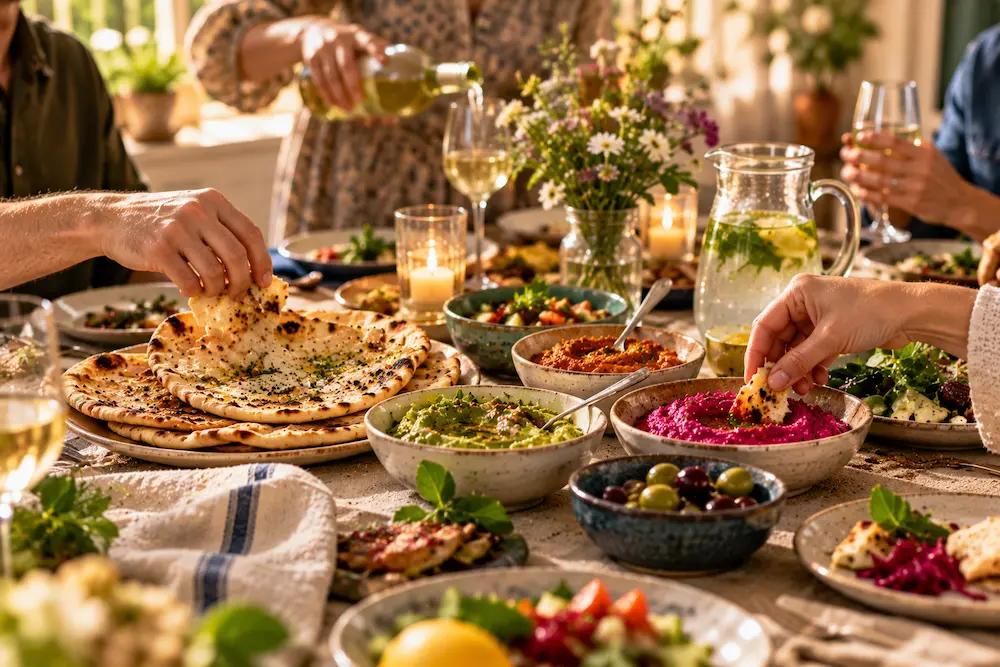
There is a particular kind of host who vanishes into the kitchen as soon as the first guest arrives and emerges forty minutes later, flushed and apologetic. The food is usually good. The evening has already slipped away. A mezze table solves this by design: nearly everything is made ahead, served at room temperature and eaten with hands.
Build the menu around contrast
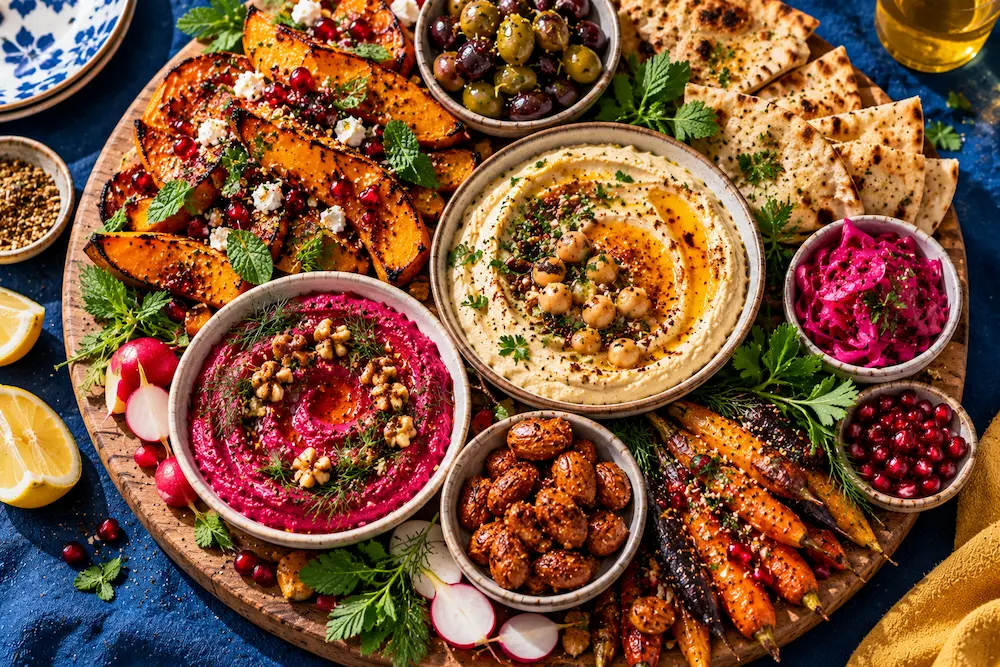
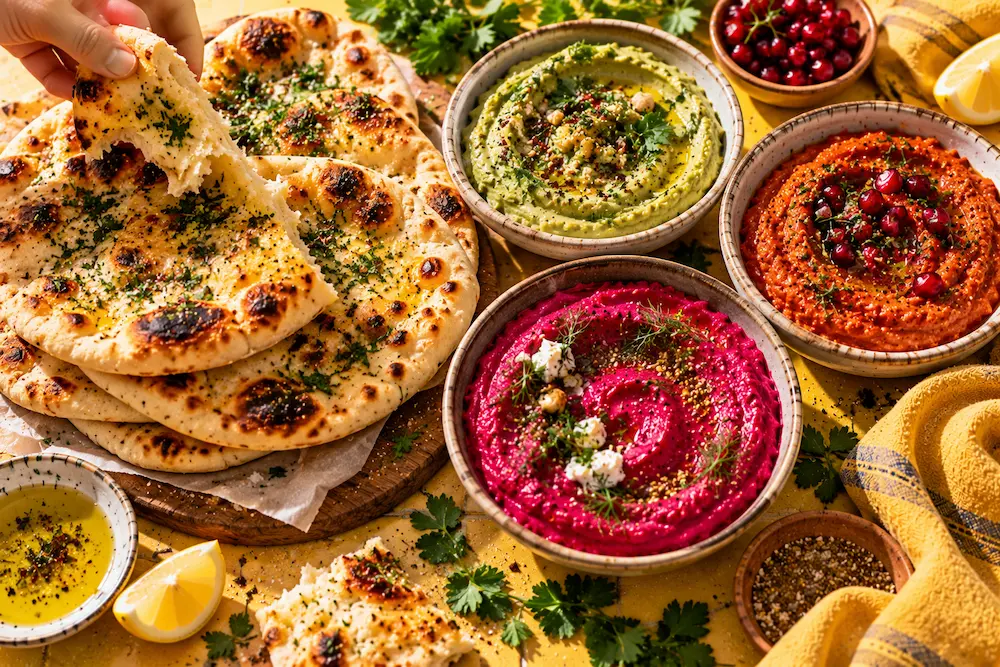
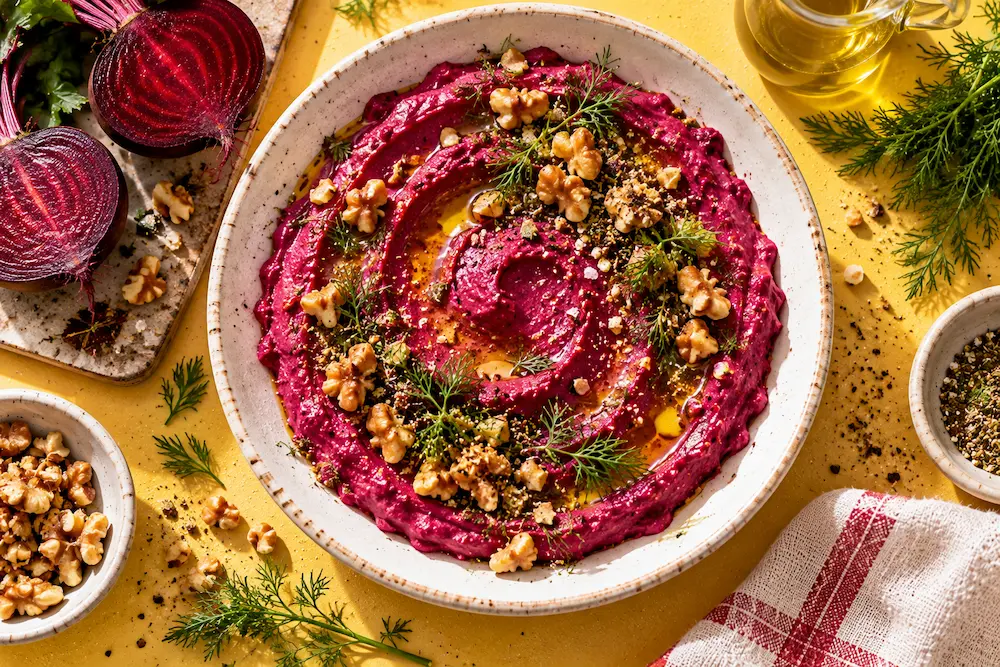
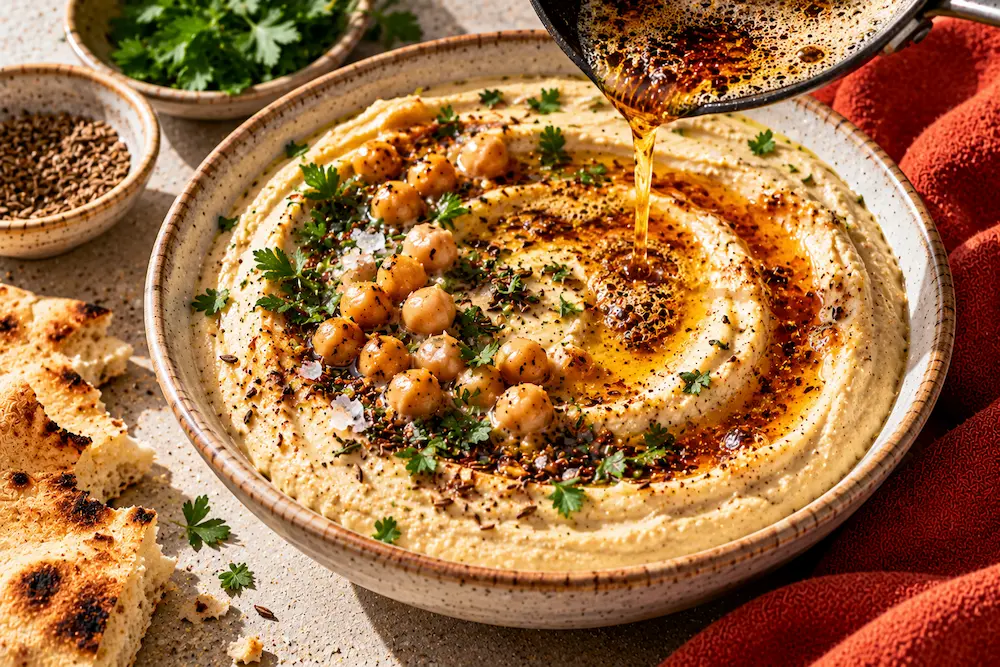
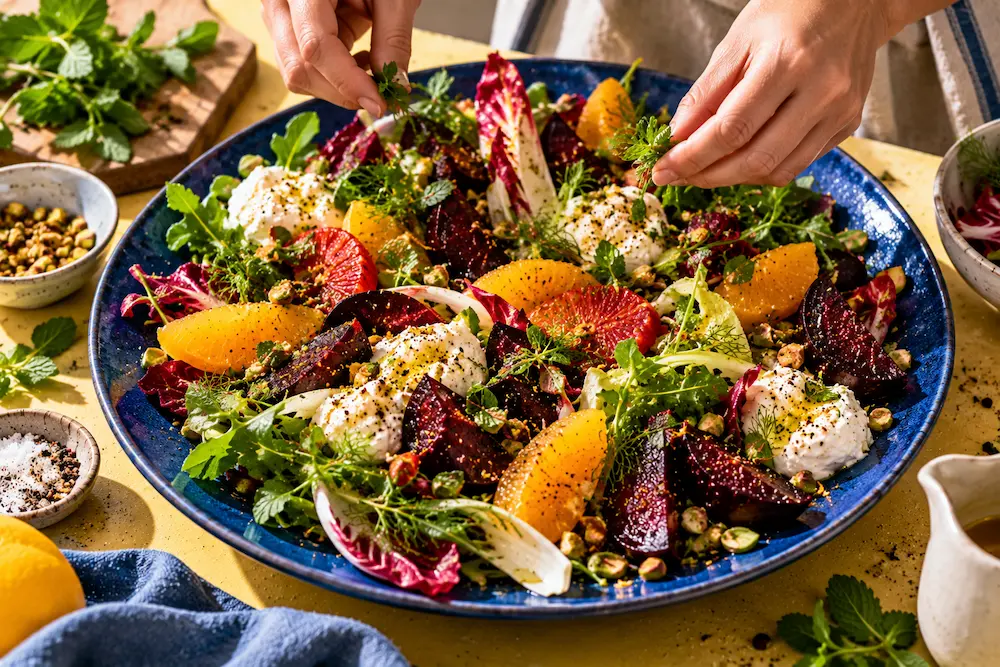
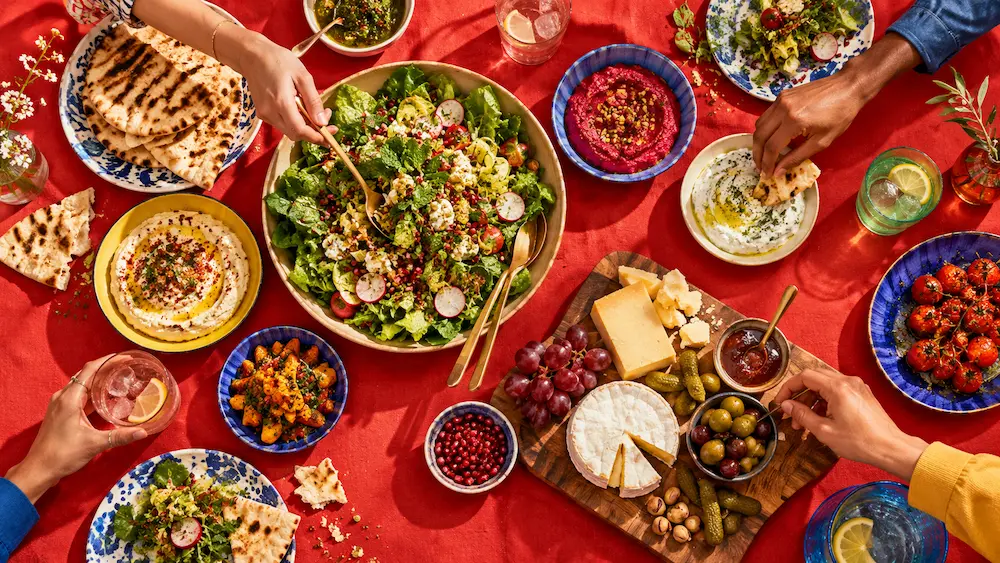
Aim for about six components: two dips, one hot item, one salad, one pickle or sharp thing and bread. Choose dishes that differ in colour, texture and temperature. For example, a smooth hummus, a tangy beetroot labneh, a herby chopped salad, warm halloumi, sharp pickles and soft flatbreads.
Two days before
- Strain yoghurt for labneh (it needs 12–24 hours).
- Make quick pickles and keep them in the fridge.
- Plan your serving dishes and boards, and note which will go where.
- Shop for everything, including drinks and napkins.
The day before
- Make the hummus and any other dips. They improve overnight.
- Roast vegetables and store them in the fridge.
- Toast and spice nuts and seeds. Keep in jars.
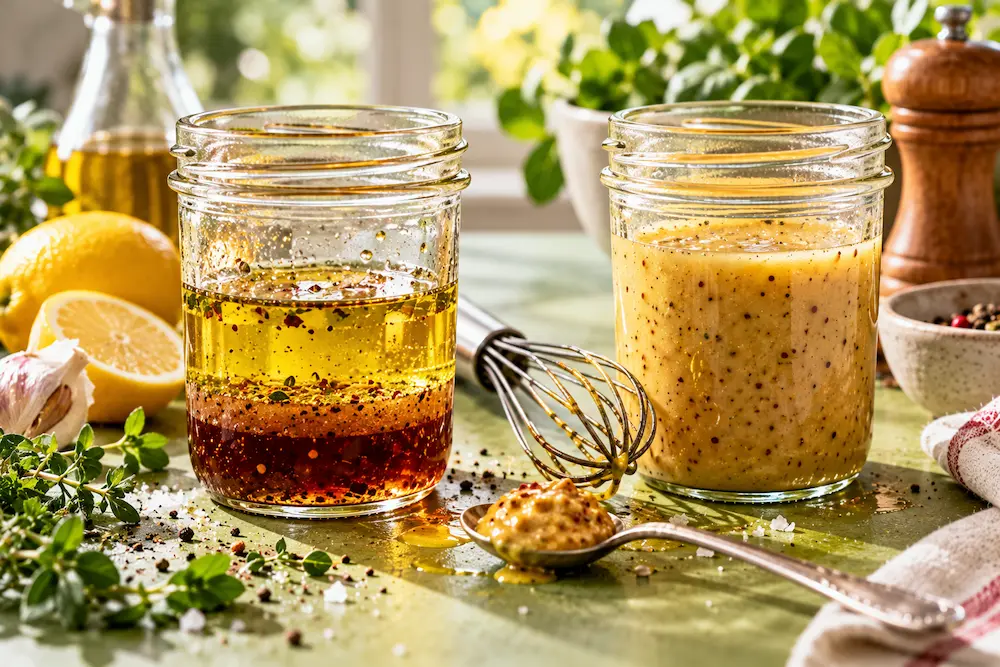
- Mix dressings, but do not add them to leaves.
- Set the table, so that is one thing less to think about.
The afternoon
Take dips out of the fridge an hour before serving so they lose their chill. Spoon them into bowls and decorate with olive oil and spices. Wash and dry herbs and leaves. Cut bread but do not warm it yet. Prepare the hot item up to the point of cooking, such as slicing halloumi or marinating vegetables.
When the doorbell rings
Have a drink and something to nibble ready by the door, such as olives or spiced nuts. This gives guests something to do and buys you ten calm minutes. Then, in the last 15 minutes, warm the flatbreads, grill the halloumi, dress the salad and put it all out. Most of that can happen while someone else tops up a glass.
Serving tips
- Use a mixture of bowls, plates and boards at different heights.
- Put a spoon in every dish so nobody dips twice.
- Place dips at opposite ends of the table so people move around.
- Keep a spare bowl of olive oil and a pot of flaky salt handy.
- Have a second batch of bread warm in a low oven.
If you are still cooking when your guests arrive, you have planned a dinner, not a party.
What to do with leftovers
Mezze leftovers are some of the best the next day. Dips become sandwich spreads, roasted vegetables turn into a grain bowl, and pickles brighten anything.
A sample timeline for eight guests
- 5.30 pm: dips out of the fridge to lose their chill; herbs washed and dried.
- 6.00 pm: oven on; flatbreads and halloumi prepped and waiting.
- 6.30 pm: bowls filled, olives and nuts on the table, music on.
- 7.00 pm: guests arrive and drinks are poured. You are free.
- 7.20 pm: flatbreads warmed, halloumi grilled, salad dressed. Everything lands together.
The exact times matter less than the pattern: all the thinking happens early, and the last twenty minutes involve nothing more than heat and assembly.
If you would like a guided run-through, our Hosting Edit workshop builds a make-ahead menu with a clear timeline, and you can try the whole thing in the studio before doing it at home.